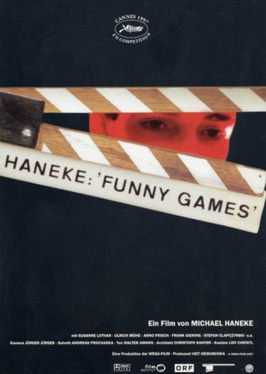
Michael Haneke's 1997 film, Funny Games, stands as a provocative and unyielding cinematic experiment, designed not just to terrify, but to interrogate its audience directly. Far from a conventional horror flick, this Austrian psychological thriller doesn't revel in gore or cheap jump scares. Instead, it forces viewers to confront their own relationship with on-screen violence, daring them to examine the desensitization that modern media often fosters. With a chillingly detached gaze, Funny Games 1997 explores the disturbing dynamics of power, control, and the uncomfortable role of the spectator in a world saturated with simulated brutality.
The Unsettling Premise of Funny Games (1997)
At its core, Funny Games 1997 presents a seemingly simple, yet devastatingly effective, narrative setup. The film introduces us to a seemingly idyllic, upper-middle-class family – Georg, Anna, and their son, Georgie – as they embark on a peaceful summer vacation to their lakeside home. The opening sequence itself is a masterclass in establishing jarring contrast: pleasant classical opera music plays as they drive, only to be abruptly interrupted by a blast of brutal thrash metal, a not-so-subtle harbinger of the darkness to come. This sudden auditory shift immediately signals that the serene facade is fragile, foreshadowing the violent disruption that will shatter their lives.
The architects of this nightmare are Peter (Frank Giering) and Paul (Arno Frisch), two seemingly polite, well-groomed young men who appear at the family's door. Dressed in pristine white gloves and sporting unsettlingly fake smiles, they introduce themselves as friends of a neighbor and ask to borrow some eggs. From this innocuous request, an insidious game of psychological and physical torture begins. Their attempts at politeness quickly reveal themselves as thinly-veiled disdain and a prelude to their cruel intentions. As their demands escalate and their true nature is unveiled, the family's pleasant holiday home transforms into a claustrophobic prison, and their perfect summer day devolves into a nightmarish struggle for survival against the boys' ruthless and seemingly motiveless "games." Haneke meticulously crafts a pervasive atmosphere of dread, ensuring that the audience feels every agonizing moment of the family's ordeal without resorting to gratuitous visual violence.
Haneke's Provocative Deconstruction of Violence
Michael Haneke, renowned for his challenging and introspective films such such as Caché and The Piano Teacher, explicitly designed Funny Games 1997 not as an exploitation film, but as a critical commentary on the exploitation of violence in cinema. He intentionally frustrates conventional audience expectations, particularly those conditioned by decades of horror films. Unlike many slasher flicks that revel in detailed gore, Haneke often cuts away precisely when the most brutal acts occur, leaving the horrific implications to the viewer's imagination. This stylistic choice is far more disturbing than any on-screen bloodbath, as it forces the audience to actively participate in constructing the violence in their own minds.
As Haneke himself famously stated in the film's production notes: "The problem is not ‘How do I show violence?’ but ‘How do I show the viewer his own position in relation to violence and its portrayal?’" This quote encapsulates the film's entire philosophy. Funny Games 1997 directly challenges the viewer's assumed neutrality, questioning why we are so often entertained by fictional suffering. Haneke posits that the "domestication" of violence through repetitive and often glorified portrayals in film and television has led to a desensitization, where brutality becomes just another plot device. By denying the audience the visceral spectacle they might unconsciously crave, he highlights their complicity and the voyeuristic pleasure some derive from cinematic violence. The film draws subtle influences from 1970s low-budget horror classics like The Last House on The Left and I Spit on Your Grave, which also took an introspective, often confrontational, look at violence. However, Haneke elevates this introspection with a meta-narrative layer, aiming to provoke a more profound self-examination rather than simply shocking the audience.
Breaking the Fourth Wall: Viewer Complicity and Manipulation
One of the most striking and discomfiting elements of Funny Games 1997 is its audacious use of fourth-wall breaks. Paul, the more articulate and ostensibly "leader" of the two assailants, frequently turns to the camera, winking, grinning, or even directly addressing the audience. These moments are not mere stylistic flourishes; they are direct challenges, dragging the viewer out of their passive observer role and into an active, uncomfortable position of complicity. Paul's direct addresses make the audience feel like co-conspirators, implicating them in the "game" he and Peter are playing.
The most infamous example of this manipulative technique occurs when, after a particularly horrifying event, the timeline is literally rewound by Paul using a remote control. This moment of meta-fiction denies the audience any relief or satisfaction they might have felt from a momentary shift in fortune for the victims, playfully snatching away hope before delivering a more grim outcome. It's Haneke's cruelest trick, demonstrating the filmmaker's absolute control and highlighting the audience's investment in conventional narrative arcs. By doing so, he exposes how readily audiences attach emotion to violence and how accustomed they are to directors dictating the emotional rhythm. This scene, among others, serves as a powerful reminder of how Haneke masterfully toys with audience expectations and emotions, leaving a lasting impression long after the credits roll. For a deeper dive into these unsettling techniques, explore The Chilling Truth Behind Funny Games (1997) Fourth Wall Breaks.
The Enduring Legacy and Impact of Funny Games (1997)
Even decades after its release, Funny Games 1997 remains a highly relevant and intensely disturbing cinematic experience. Its unflinching examination of violence, media consumption, and viewer responsibility continues to spark debate and critical analysis. The film's impact lies not in its ability to shock with explicit imagery, but in its psychological torment and its relentless insistence on holding a mirror up to its audience. It challenges the passive consumption of violence, daring viewers to question why they watch, what they enjoy, and what their enjoyment implies about broader cultural desensitization.
Haneke's vision was so potent that he later remade the film shot-for-shot in 2007 with an American cast, including Naomi Watts and Tim Roth. This unprecedented decision further underscored his message: the film's core themes transcend language and cultural context, making its critique of violence universal. The remake served as a re-statement, proving that the discomfort and the questions it raised were as pertinent in Hollywood as they were in European art house cinema.
Practical Tip for Viewers: When watching or re-watching Funny Games 1997, resist the urge to simply be entertained. Instead, try to actively engage with Haneke's questions. Pay attention to moments where Paul addresses the camera or manipulates the narrative. Ask yourself why these moments make you uncomfortable. Consider how the film's deliberate lack of gratification (no clear motive, no heroic escape, minimal gore) impacts your viewing experience compared to more conventional thrillers. This analytical approach can unlock a deeper understanding of its profound message. For more insights into its lasting power, read Funny Games (1997): Why This Horror Thriller Still Challenges Audiences.
Funny Games 1997 is more than just a horror film; it's a profound cinematic essay, a meta-commentary, and a psychological experiment all rolled into one. Michael Haneke brilliantly orchestrates a terrifying ordeal that extends beyond the screen, directly implicating the viewer in its disturbing narrative. It stands as a timeless reminder that sometimes, the most unsettling questions are the ones we're forced to ask ourselves.